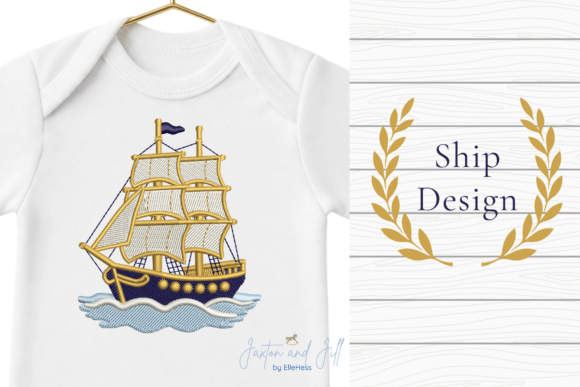
Sailboat Embroidery Nautical Ship Design
As an embroidery designer who spends half my life in front of a hoop and the other half setting up booths for weekend craft fairs, I know that not every digital file translates into a bestseller. You can have the most beautiful machine embroidery design on paper, but if it doesn’t hold up under the harsh lights of a convention center or fail to catch the eye of a passerby walking past your table, it’s just data. That is why I approach every new acquisition with a critical eye, focusing on marketability, production efficiency, and visual impact. Today, I am reviewing the Sailboat Embroidery Nautical Ship Design, a piece described as showcasing a "stately nautical ship with sails billowing in unseen breezes and tender ocean waves beneath." This description alone suggests a premium, classic aesthetic that could fit perfectly into the current trend of coastal cottagecore and modern nautical decor.
First Impressions: The Vibe and Visual Appeal
When you look at the title and description, the immediate feeling is one of elegance and tradition. This isn’t a cartoonish, overly cute clip-art style; it feels "stately" and detailed. For a craft fair product, this distinction is vital. Customers at handmade markets are often looking for items that feel like heirlooms or high-quality gifts rather than disposable novelties. The imagery of billowing sails and ocean waves evokes a sense of movement and tranquility. It appeals strongly to the "Beach" lifestyle category without being cliché. It strikes a balance between rustic charm and refined taste, making it versatile enough for a variety of demographics, from young couples buying their first home to retirees decorating summer cabins.
The design likely possesses a strong focal point. In a busy booth environment, where dozens of items compete for attention, a design with clear lines and defined shapes wins. The contrast between the white sails and the darker hull or water elements will create depth, which is crucial for embroidered goods. If executed well, this embroidery file will pop off light-colored fabrics, drawing the eye immediately. It feels decorative yet substantial, suggesting that when stitched onto a product, it will command a higher price point because it looks labor-intensive and skilled.
Product Applications: Where Does It Shine?
Not all products are created equal, and the success of Sailboat Embroidery Nautical Ship Design will depend heavily on what canvas you choose. Based on my experience producing handmade product lines, here is how this design performs across key categories:
- Tote Bags and Market Bags: This is perhaps the strongest application. A large, centered placement on a natural canvas tote bag allows the full breadth of the ship and waves to be appreciated. The sturdy fabric supports the weight of the stitches, and the nautical theme aligns perfectly with the utility of a beach bag. It becomes a functional piece of art.
- Apron Embroidery: Placing this on the bib of a denim or linen apron adds a touch of personality to the kitchen. It works exceptionally well for gift sets. The vertical orientation of many ships fits the narrow space of an apron bib beautifully, creating a tall, elegant silhouette.
- Tea Towel Embroidery: Hemstitched tea towels are a staple at craft fairs. A smaller version of this design near the hem offers a subtle, sophisticated accent. However, you must ensure the design is scaled correctly so the details do not get lost in the weave of the towel.
- Embroidered Patch: Converting this into a patch with a satin border allows for versatility. Customers can sew it onto jackets, hats, or backpacks. Patches are low-cost impulse buys that drive volume at your booth.
- Caps and Beanies: Curved surfaces present challenges. While a cap might look great, the curvature can distort the perspective of the ship unless the design is specifically digitized for curved hooping. Proceed with caution here.
- Pillow Covers: For the home decor section, a square pillow case with this design centered creates a stunning focal point. It elevates the perceived value of the item significantly.
Production Realities and Practical Considerations
Before committing to bulk production for an Etsy seller or a weekend market run, we need to talk about the technical execution. The description mentions "detailed" elements. In embroidery, detail is a double-edged sword. Fine lines and tiny text can become muddy if the stitch density is too high or if the thread tension is off.
You must test this digital embroidery file on scrap fabric before buying inventory. Pay close attention to the transition between the sails and the sky. If there is negative space, does it require excessive running stitches that might pucker the fabric? Also, consider the hoop size. If the design is large, you may need a larger hoop, which limits the types of garments you can embroider (e.g., you cannot hoop a standard t-shirt chest area if the design exceeds the hoop dimensions). Always confirm the maximum dimensions provided by the creator.
Another critical factor is thread colors. To make this design sing, you need high-contrast threads. White sails on a navy blue background will look crisp and professional. However, if you try to stitch this on a grey or black fabric, the white might not stand out enough, or you may need to use a heavier thread count. Test your color palette early. I recommend using a stabilizer appropriate for the fabric weight; cut-away stabilizer is usually best for woven cottons like tote bags and towels to prevent distortion over time.
Marketing and Sales Strategy
How do you sell this story? When photographing your finished product for online listings or social media, lighting is everything. Natural light is your best friend. Show the texture of the embroidery. Close-up shots that highlight the sheen of the polyester or rayon threads will convey quality. Since this is a small shop product, your brand consistency matters. Use props that reinforce the nautical theme—driftwood, shells, or vintage maps in the background of your photos.
For your physical booth, display the design on multiple items simultaneously. Hang a tote bag next to a folded apron and lay out a tea towel. This repetition reinforces the pattern and helps customers visualize the design on different uses. It answers the question, "Can I use this for more than one thing?" By showing versatility, you increase the perceived value. Furthermore, offering a printable mockup option for digital buyers allows them to see how the design might look on their own fabric, bridging the gap between digital download and tangible reality.
Final Verdict and Designer Notes
The Sailboat Embroidery Nautical Ship Design has all the hallmarks of a successful commercial embroidery project. It is thematic, visually striking, and adaptable to multiple product types. It avoids the trap of being too trendy by leaning into a timeless maritime aesthetic. However, its success hinges on proper execution.
My final advice is to treat this as a premium line item. Do not rush the production. Inspect every stitch-out for loose ends or misalignments. Ensure that the commercial licensing is clear if you plan to sell finished goods, as this protects your business legally. Check the specific file format compatibility with your machine. Verify that the design assets include any necessary trim files if you plan to add lettering like "Summer" or "Coastal."
If you execute this with care, paying attention to fabric texture and thread choice, this design will not only sit on your shelf but fly off it. It represents the kind of thoughtful, high-quality craftsmanship that handmade buyers seek out. It transforms simple fabric into a statement piece, capturing the spirit of the sea in every stitch. For any serious embroidery entrepreneur, this is a design worth adding to your portfolio.