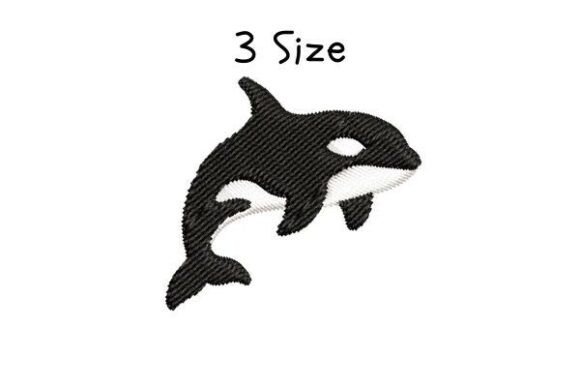
Orca Whale Embroidery Review
As an embroidery designer who has spent years refining digital files for commercial production, I approach every new download with a critical eye. We are not just looking for pretty pictures; we are looking for assets that translate well into physical products, hold up under industrial washing machines, and elevate brand identity. Today, I am reviewing the Orca Whale Embroidery design, a piece marketed as "A Bold Splash of Marine Magic." This review focuses on its viability for small business merchandise, branded patches, uniforms, and handmade product lines.
First Impressions: Visual Personality and Professionalism
The title suggests a design that is both majestic and striking. In the world of machine embroidery, capturing the essence of a marine mammal like an orca requires careful balance. You want to avoid designs that look too cartoonish for professional branding, yet you also want to steer clear of overly complex realistic renders that lose detail when stitched at small sizes. Based on the description, this design aims for a bold aesthetic. For a small business owner, this means the design likely carries strong visual weight, making it suitable for brands that want to project strength, clarity, and a connection to nature.
When evaluating any embroidery file, the first step is imagining how it sits on a garment. Does it feel premium? Playful? The orca’s high-contrast black and white markings naturally lend themselves to clean, modern aesthetics. This makes it a versatile choice for brand identity. It works equally well for a coastal café, a sustainable fashion label, or a wildlife-focused nonprofit. The design promises to be more than just decorative; it serves as a statement piece that can anchor a collection of small business merch.
Real-World Business Applications
Let’s move beyond the screen and look at where this design shines in actual production environments. The versatility of the orca motif allows it to be applied across various touchpoints for a brand.
- Embroidered Patches: One of the most profitable applications for this design is creating custom patches. Whether attached to denim jackets, backpacks, or work boots, the orca’s distinct silhouette reads clearly from a distance. This is ideal for custom apparel lines aiming for a rugged or outdoorsy vibe.
- Staff Uniforms and Aprons: For a seafood restaurant, a marine biology tour operator, or a boutique hotel, placing this design on the left chest of a polo shirt or the pocket of an apron adds a layer of professionalism. It signals expertise and thematic consistency without being distracting.
- Cap Embroidery: The structured front of a baseball cap provides a perfect canvas. A well-executed orca design here becomes a recognizable logo. It transforms a standard hat into a branded asset that customers will wear proudly, offering free advertising for your business.
- Tote Bag Design: Canvas totes are staples for Etsy sellers and craft fair vendors. An orca embroidery design adds texture and perceived value to a simple tote bag, allowing you to charge a premium price point compared to printed alternatives.
- Product Packaging Accents: Don’t overlook smaller items. Adding a tiny orca accent to gift boxes, bakery bags, or flower bouquets creates a memorable unboxing experience. This attention to detail fosters customer trust and encourages social media sharing.
Strategic Placement for Maximum Impact
To maximize the effectiveness of this digital embroidery file, consider strategic placement. For apron embroidery, centering the design draws attention to the maker. On a tote bag design, placing it off-center can create a more artistic, contemporary feel. When used as a sleeve detail on work shirts, it adds a subtle nod to the brand’s values without overwhelming the garment’s functionality.
Critical Considerations: Where to Exercise Caution
No design is perfect for every application. As a designer, I must highlight specific areas where the Orca Whale Embroidery might face challenges depending on its stitch density and line weight.
Small Patch Sizes: If you intend to produce patches smaller than two inches, you must ensure the design retains legibility. Fine details in the eye or whiskers may become muddy if the stitch count is too high for the available space. Always test at the final production size.
Curved Surfaces: Applying this design to curved surfaces like cap fronts or rounded hats requires proper hooping techniques. If the fabric stretches during stitching, the symmetry of the orca could be distorted. Using a cutaway stabilizer is non-negotiable here to maintain structural integrity.
High Stitch Density and Dark Uniforms: While the black and white contrast of the orca is natural, embroidering solid black fills on dark uniforms can sometimes lead to a heavy, stiff texture. Conversely, white thread on light fabrics needs sufficient coverage to prevent the base fabric from showing through. Inspect the spacing in the design to ensure there is enough negative space to keep the embroidery breathable and flexible.
Fabric Texture: The performance of this design varies by material. It will look crisp on smooth cotton twill but may struggle on highly textured fabrics like heavy wool or loose-weave linen, where stitches can sink in or distort. Always test on the actual fabric you plan to use.
Impact on Brand Identity and Customer Trust
Investing in quality embroidery elevates the perceived value of your products. Customers associate the tactile quality of commercial embroidery with durability and care. When a buyer sees a professionally stitched orca on a handmade product, they perceive higher craftsmanship. This directly influences buyer engagement and conversion rates.
Furthermore, visual consistency is key to building a loyal customer base. By using a cohesive design language across your design assets—from your website to your physical tags—you reinforce brand recognition. The orca, as an apex predator, subconsciously communicates reliability and power. Leveraging this imagery helps position your brand as authoritative and established, even if you are a new entrant in the market.
Practical Designer Notes for Production
Before you commit to a large production run, follow these essential steps to ensure the Orca Whale Embroidery meets your standards:
- Test in Black and White: Convert the design to grayscale to check contrast levels. Ensure the separation between the black and white sections is clear and will not bleed together during stitching.
- Check Small Scale Legibility: Zoom out to simulate a 1-inch patch size. Can you still identify it as an orca? If not, simplify the design or increase the minimum stitch length.
- Review Thread Color Contrast: Select threads that offer high contrast against your target fabric. Standard black and white polyester threads are usually safe bets, but consider metallic or variegated threads for a unique twist if it aligns with your brand colors.
- Inspect Spacing and Hoop Size: Confirm the hoop size required by the file matches your machine’s capabilities. Ensure there is adequate spacing between elements to prevent thread breaks.
- Test on Real Fabric: Never skip the sample run. Stitch the design on your actual product fabric with your chosen stabilizer. Check for puckering, registration issues, or thread tension problems.
- Create a Printable Mockup: Use a printable mockup to visualize the design on your final product before cutting fabric. This helps in client approvals and marketing materials.
- Confirm Commercial Licensing: Most importantly, verify the license terms. Ensure you have the right to sell products made with this embroidery design. Unlicensed use can lead to serious legal issues for your small business.
In conclusion, the Orca Whale Embroidery offers a strong foundation for businesses looking to add marine-themed flair to their inventory. With careful planning regarding size, fabric, and stabilization, it can serve as a powerful tool for enhancing your finished product and delighting your customers. Treat it as a core part of your design assets library, and it will pay dividends in brand loyalty and sales.