Minimalist Line Art Machine Embroidery Review
When I first opened the file for Minimalist Line Art Machine Embroidery, my immediate thought wasn't about the stitch count or the technical specifications. It was about the vibe. There is a specific energy required when you are designing for a professional audience, and this design hits that mark instantly. As someone who has spent years refining embroidery files for commercial use, I look for designs that speak without shouting. This piece does exactly that. It feels like a clean line drawing brought to life with thread, offering a sophisticated aesthetic that works beautifully for hair artists, barbers, and grooming experts.
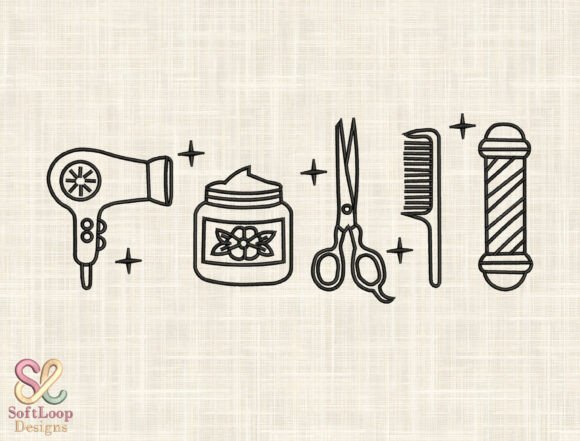
The product description highlights "five classic tools of the trade," and seeing the layout in the preview window, it promises a balanced composition. In the world of embroidery design, balance is everything. Too much detail can get lost on small items, while too little can look cheap. This Minimalist Line Art Machine Embroidery strikes a rare chord between simplicity and character. It creates a mood of modern professionalism, making it an ideal candidate for branding projects where clarity is key.
Real-World Application: The Barber Shop Tote Bag
To truly understand the potential of this design, I put myself in the shoes of a small business owner preparing for a busy holiday season. Imagine you are creating custom merchandise for a local salon or a boutique barber shop. You need something that looks high-end but doesn't break the bank to produce. I envision taking this Minimalist Line Art Machine Embroidery file and placing it on a durable canvas tote bag. The scenario is simple: a gift for a loyal client or a promotional item for a new staff member.
On a sturdy cotton canvas, the line art would translate perfectly. The clean strokes would stand out against the texture of the fabric without getting muddy. Unlike complex fill stitches that might overwhelm a flat surface, this embroidery file relies on negative space and precise lines. When stitched onto a tote, it becomes a statement piece. It signals that the brand cares about details. Customers walking into a shop and seeing a tote with such a refined, graphic design will immediately perceive the value of the service inside. It elevates the perceived quality of the finished product, turning a simple accessory into a badge of honor for the wearer.
This same logic applies to other wearable items. Picture a heavyweight sweatshirt for a stylist's uniform. The minimalist approach ensures that the logo remains legible even after years of washing. For a baby onesie intended as a "future barber" gift, the soft lines prevent the design from feeling too harsh or heavy-handed. It adds a touch of whimsy without sacrificing the professional theme. Whether you are an Etsy seller listing handmade goods or a decorator working on corporate gifts, the versatility here is undeniable.
Where to Exercise Caution
However, being an experienced reviewer means looking at the flaws alongside the features. Not every project is a good fit for Minimalist Line Art Machine Embroidery. If you are planning to use this on a stretchy jersey knit cap, you need to be careful. While the design is elegant, running stitches on highly curved surfaces can sometimes distort if the tension isn't perfect. The lack of dense fill areas means there is less structural stability in the stitch pattern itself, so proper stabilizer choice becomes critical.
I would also advise against using this on very thin fabrics or materials with a heavy texture, like a rough burlap sack. The fine lines of the line art might disappear into the weave of the material. Similarly, if you are working with dark fabrics, you must ensure your thread colors offer enough contrast. A black outline on a navy blue shirt might vanish, defeating the purpose of the chic, modern look. Always test your thread color combinations before committing to a bulk order of finished products.
Another area to watch is the hoop size. Because this design relies on precision, trying to shrink it down too much for a tiny patch or a small button loop could result in lost details. The "five classic tools" might merge into a blob if the scale is too small. Conversely, if you are working on a large apron or a blanket, the design might feel a bit sparse if not scaled up appropriately. It is a design that demands respect for its proportions.
Visual Appeal and Brand Consistency
One of the most valuable aspects of this embroidery design is its ability to enhance brand consistency. In the current market, consumers are savvy; they can tell the difference between a mass-produced print and a carefully crafted handmade product. This design bridges that gap. The clean lines mimic vector graphics, which makes it excellent for creating printable mockups and digital previews. If you are selling digital assets or showcasing your work online, this file provides a crisp image that translates well to screens.
For a craft business, the visual clarity builds trust. When a customer sees a neatly stitched, professional-looking logo on a personalized gift, they assume the business behind it is equally reliable. The Minimalist Line Art Machine Embroidery style avoids the cluttered look of older embroidery trends, aligning instead with contemporary interior decor and fashion. It fits seamlessly into a nursery, a modern kitchen, or a stylish boutique. The "Work" category designation in the product details is fitting because it speaks directly to the professional identity of the user, whether that is a barber, a makeup artist, or a creative entrepreneur.
Practical Notes for the Designer
If you are ready to integrate this into your workflow, here are some essential steps to ensure success. First, always run a test stitch on scrap fabric that matches your final project material. This allows you to check the stitch density and see how the running stitch behaves on your specific cloth. Pay close attention to the corners of the scissors or clippers depicted in the design; these sharp angles can sometimes cause thread breaks if the machine tension is off.
Check your stabilizer options. For a design with minimal fill, a cut-away stabilizer is often best to prevent puckering, especially on woven fabrics. If you are working with knits, a tear-away might suffice, but be sure to support the area well during stitching. Also, review the thread colors available in your palette. Sometimes, a monochromatic scheme looks more striking than a multi-colored one for line art. Test the design in black and white mockups to ensure the shapes hold up without relying on color to define them.
Finally, verify your licensing terms. Before selling finished items like embroidered patches, tote bags, or custom apparel, confirm that the license permits commercial use. Many designers create amazing assets, but the rules for reselling them vary. Ensure you have the right to sell the physical products created with this digital embroidery file. By following these practical steps, you can transform a simple digital download into a premium asset for your crafter business.
In conclusion, Minimalist Line Art Machine Embroidery is a thoughtful addition to any library of design assets. It offers a sleek, professional look that resonates with modern aesthetics while remaining practical for real-world applications. Whether you are crafting a unique holiday gift or building a cohesive brand identity for a grooming salon, this design delivers the clarity and elegance needed to impress. It is a reminder that sometimes, the simplest lines carry the most weight.