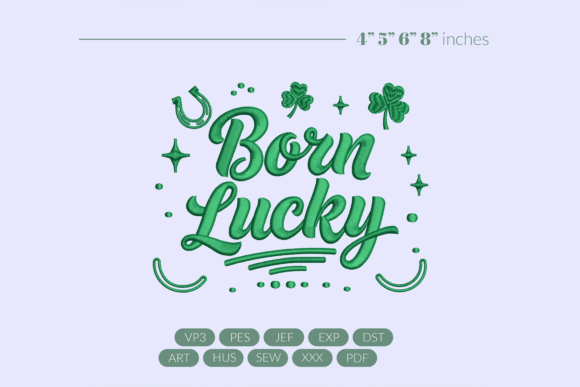
Born Lucky St. Patricks Day Embroidery Review
As an embroidery designer who spends weekends hunched over a sewing machine and weekdays planning inventory for craft fairs, I have learned one hard truth: a design is only as good as its sellability. You can create the most technically perfect stitch pattern in the world, but if it does not catch the eye of a passerby at a busy market or convert a browser into a buyer on Etsy, it is just digital clutter. This week, I pulled Born Lucky St. Patricks Day Embroidery from my library to test its viability for the upcoming St Patrick S Day season. I wanted to see if this design could stand out among the sea of green merchandise that floods our booths every March.
First Impressions and Visual Appeal
The moment I loaded the file, the first thing that struck me was the balance between elegance and festivity. The description promises "elegant script typography accented with four-leaf clovers, a horseshoe, and festive sparkles," and it delivers. In the embroidery industry, we often struggle to find designs that are cute without being childish, or modern without losing their handmade charm. Born Lucky St. Patricks Day Embroidery hits that sweet spot of farmhouse chic with a touch of whimsy.
The script font appears bold enough to be read from three feet away—a critical factor for craft fair signage and product displays—but refined enough to feel premium. The inclusion of the horseshoe and clovers provides immediate thematic recognition, while the sparkles add a layer of texture that catches the light. For a handmade product, this visual hierarchy is crucial. Customers do not stop to analyze stitch quality; they stop because the message resonates. This design communicates luck, joy, and celebration instantly.
Product Versatility and Best Uses
One of the biggest questions I get from fellow Etsy sellers and boutique makers is, "Where should I put this?" Based on my testing, Born Lucky St. Patricks Day Embroidery is incredibly versatile, but some applications will yield higher profit margins than others.
- Tote Bag Design: This is perhaps the strongest application. A canvas tote bag offers a large, flat surface area that allows the script and accompanying graphics to breathe. When displayed on a booth table, a tote bag acts as both a product and a billboard. The contrast of dark thread on natural canvas or bright green thread on white fabric makes this design pop.
- Apron Embroidery: Kitchen linens are perennial best-sellers. Placing this design on the chest pocket or centered on the bib of a denim or white apron elevates the item from a basic utility tool to a giftable craft fair product. It appeals to home cooks who want to celebrate the holiday in style.
- Tea Towel Embroidery: Similar to aprons, tea towels are low-cost items that buyers often impulse-purchase. However, because the fabric is thinner and more textured, you must ensure your stitch density is appropriate so the design does not pucker. If the design includes dense fill stitches, consider using it as a smaller accent rather than a full-width print.
- Embroidered Patch: Converting this design into a patch allows for use on jackets, backpacks, and hats. Patches are excellent for clearing inventory because they require less fabric and can be sold at a high markup as accessories.
- Caps and Headwear: Curved surfaces present a challenge. While the script may look beautiful flat, it can distort on a curved cap brim or crown. I recommend testing this on a structured baseball cap front panel, ensuring the hoop size accommodates the curvature without distortion.
Production Practicality and Batch Manufacturing
For any commercial embroidery business, efficiency is key. Can you produce fifty units of this design in a weekend? Generally, yes, provided the design file is optimized. The combination of script (usually satin stitches) and graphic elements (likely fill stitches) requires careful attention to threading.
If the design utilizes many color changes, production time will increase. However, the elegant nature of the script suggests a limited palette, likely greens, whites, and blacks, which streamlines the process. When setting up your machine, confirm the hoop size required. If the design is too large for standard hoops, you may need to reposition the fabric mid-stitch, which adds labor time. For batch production, keeping the design within a single hoop size maximizes throughput.
Photography is another production step. Because this design relies on text legibility, it photographs exceptionally well for online listings. A close-up shot showing the texture of the thread colors against the fabric texture will help online customers understand the quality. Unlike abstract patterns, text-based designs allow customers to "read" the value proposition before they even click "add to cart."
Technical Considerations and Careful Use Notes
While the design is visually appealing, there are technical pitfalls to avoid. Always inspect the stitch density closely. If the script letters are too thin, they may break or fray after washing. Conversely, if the clover and horseshoe elements are overly dense, they may create stiff spots on soft fabrics like jersey or lightweight cotton.
Be mindful of small details. The "festive sparkles" mentioned in the description might consist of tiny running stitches. On dark fabric or textured materials like burlap, these fine details can get lost. To maintain clarity, use high-contrast threads. For example, white or metallic gold thread on a dark green background will preserve the sparkle effect far better than black on black.
Furthermore, check the spacing of the lettering. Script fonts can sometimes have overlapping loops that cause the needle to hit existing stitches, leading to thread breaks. Run a test on scrap fabric that mimics the weight and weave of your final product. This simple step saves hours of troubleshooting during peak sales seasons.
Strategic Selling and Brand Consistency
Incorporating Born Lucky St. Patricks Day Embroidery into your lineup does more than just sell individual items; it strengthens your brand identity. Craft fair shoppers look for consistency. If your booth features cohesive designs that share a similar aesthetic—elegant, festive, and well-executed—buyers perceive your entire collection as higher quality.
This design also lends itself well to bundling. You could offer a "Lucky Set" comprising a matching apron and tea towel, or a tote bag paired with a embroidered patch. These bundles increase your average order value and move inventory faster. For digital sellers, creating printable mockups of this design on various products allows you to list items before you even sew them, validating demand before committing to material costs.
Final Designer Verdict
Is Born Lucky St. Patricks Day Embroidery worth adding to your stash? Absolutely. It strikes a rare balance between trendy and timeless, making it suitable for both casual gift-givers and serious collectors. Its versatility across totes, kitchen linens, and accessories ensures that you can target multiple customer segments with a single embroidery file.
However, success depends on execution. Do not skip the preparation steps. Review your design assets carefully, choose the right stabilizer for your chosen fabric, and always create at least one real mockup before launching your listing. Confirm your commercial licensing terms to ensure you are protected when selling finished goods. By treating this design with the same professional rigor you would apply to any major project, you position yourself to capitalize on the St Patrick S Day rush with confidence and style.