Beer Bottles Cheers Toast Embroidery Review
As an experienced embroidery designer who has spent years refining design assets for small business merchandise, I approach every new file with a critical eye. When evaluating Beer Bottles Cheers Toast Embroidery, my focus shifts immediately from simple aesthetics to commercial viability. This is not just about a pretty image; it is about how a design functions as a brand asset on caps, aprons, and tote bags. For owners of boutiques, bakeries, or creative studios looking to elevate their custom apparel, understanding the nuances of this machine embroidery design is essential.
The first impression of Beer Bottles Cheers Toast Embroidery suggests a blend of rustic charm and celebratory energy. The title alone evokes a sense of community and leisure, making it an ideal candidate for businesses that want to project a friendly, welcoming atmosphere. Whether you are running a craft business, a local café, or a handmade product line, the visual personality of this design feels both playful and premium. It strikes a balance between professional polish and the warm, inviting feel of a gathering. However, translating that digital concept into a physical finished product requires careful planning regarding stitch density, thread colors, and placement.
Real-World Application for Small Business Merch
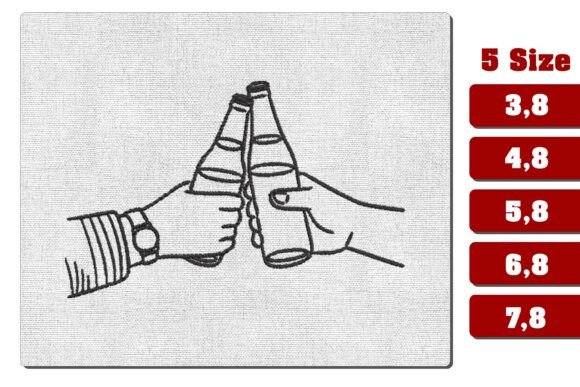
In the world of commercial embroidery, versatility is king. Beer Bottles Cheers Toast Embroidery offers multiple sizes ranging from 3.8 inches to 7.8 inches, which provides significant flexibility for various projects. This range allows designers to utilize the design as a prominent chest logo on work shirts, a subtle sleeve detail, or a bold accent on large tote bag designs. For instance, a bakery might use the 4.8-inch version as a charming patch on staff aprons, while a larger event merch campaign could leverage the 7.8-inch size for back-of-shirt statements.
I have seen many brands struggle when trying to adapt a single design across different mediums. With Beer Bottles Cheers Toast Embroidery, the scalability is a major advantage. You can create a cohesive brand identity by using the same design motif on embroidered patches, cap embroidery, and product packaging accents. Imagine a florist attaching a small version of this design to gift baskets, or a pet brand sewing it onto durable canvas totes. The ability to scale ensures that your digital embroidery file remains effective whether it is applied to a small patch or a large garment panel.
This design also excels in creating customer gifts and event merchandise. A brewery or taproom could use it to reward loyal customers with branded caps, while a wedding planner might incorporate it into rehearsal dinner attire. The "Cheers" theme resonates universally, making it a safe yet stylish choice for diverse industries. It transforms standard uniform items into memorable brand experiences, increasing buyer engagement and fostering a sense of belonging among your clientele.
Strategic Placement and Fabric Considerations
While the design is versatile, there are specific scenarios where caution is required. When considering Beer Bottles Cheers Toast Embroidery for cap embroidery, one must account for the curved surface of the hat. Designs with high stitch density or intricate outlines may distort if not digitized correctly for curvature. If the design features tiny lettering or detailed bottle outlines, testing on a sample cap is crucial before committing to a bulk run.
Fabric texture plays a pivotal role in the final look. On smooth fabrics like cotton twill or polyester blends, the design will appear crisp and clean. However, on textured fabrics like heavy canvas or fleece, the stitches may sink in, altering the visual impact. For dark uniforms, the thread colors become even more critical. High contrast is necessary to ensure the design stands out without appearing muddy. If the original file relies on light background colors, you may need to adjust the underlay or thread palette to maintain visibility on black or navy garments.
Another area requiring attention is frequent washing. Items like apron embroidery or work shirts undergo rigorous cleaning cycles. If the stitch density is too low, the design may pucker or fade quickly. Conversely, if the density is too high, the fabric may stiffen, affecting comfort. It is vital to inspect the spacing and confirm hoop size limitations to prevent distortion during the washing process. Always test on real fabric rather than relying solely on a printable mockup to gauge durability.
Building Brand Identity Through Quality Embroidery
Every stitch tells a story about your business. Beer Bottles Cheers Toast Embroidery can significantly influence brand identity, customer trust, and perceived product value. A well-executed embroidered patch signals professionalism and attention to detail. Customers often equate the quality of the embroidery with the quality of the products or services provided. When a design looks polished, it reinforces the idea that the business cares about its presentation.
Visual consistency is key to building recognition. By integrating this design across all touchpoints—from tote bag designs to product labels—you create a unified visual language. This consistency helps customers identify your brand instantly. Furthermore, the handmade presentation of a custom embroidered item adds a layer of value that mass-produced prints cannot match. It elevates the perceived worth of the item, allowing you to command higher prices for your merchandise.
However, poor execution can damage brand reputation. If the design appears distorted, has loose threads, or lacks proper stabilization, it undermines the entire brand image. Therefore, reviewing the design assets thoroughly before production is non-negotiable. Ensure that the embroidery file aligns with your brand's aesthetic standards. If the design feels too casual for a luxury boutique, consider modifying the color scheme or combining it with other design elements to better suit your target audience.
Practical Designer Notes for Production
Before moving forward with any commercial embroidery project, there are several technical steps every designer should follow. First, test the design in black and white to check the contrast and legibility without the distraction of color. Next, review the stitch density and spacing to ensure there are no areas where the fabric might pull or tear.
Confirm the hoop size requirements for each intended size (3.8 in to 7.8 in) to avoid cropping issues. Check if the design works effectively at the smallest patch size, as details often get lost when scaled down. Use proper stabilizer for the specific fabric type to prevent puckering and ensure the design sits flat. Create a printable mockup for client approval to visualize the final result on different materials.
Finally, compare the design beside other design assets in your collection to ensure visual harmony. Most importantly, confirm commercial licensing terms before using Beer Bottles Cheers Toast Embroidery for resale items. Understanding the license ensures you are protected legally when selling branded merchandise. While the available sizes offer great flexibility, always verify specific file formats and stitch counts provided by the creator to guarantee compatibility with your embroidery machines.
By treating Beer Bottles Cheers Toast Embroidery as a strategic tool rather than just a decorative element, small business owners can create high-quality, recognizable merchandise that drives sales and builds loyalty. Whether used for Father S Day promotions or everyday branding, this design has the potential to become a staple in your product lineup when executed with precision and care.